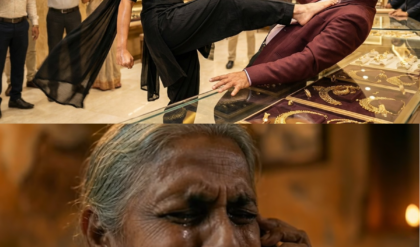
My Parents’s Lawyer Sent Me 1 Document After 3 Years of No-Contact—I Read It And Burst Out LAUGHING

My name is Eliza Foster. I am 31 years old. Three days ago, I sat in a high-rise law office in downtown Nashville looking at a legal document.
For 3 years, my parents pretended I did not exist. They skipped my college graduation.
They told their country club friends I was mentally unstable. They looked my hard-working husband in the eye and called him low class.
And then their attorney sent me a certified letter. My father needed my signature to sell Foster Ridge, a 40 acre tract of prime Tennessee land worth over a million dollars.
He needed me to voluntarily sign away my rights so he could pocket the money and save himself from a financial disaster.
I read the paper. I looked at attorney William Davis sitting across the mahogany table in his bespoke suit and I laughed.
It was not a polite chuckle. It was a loud echoing laugh that bounced off the glass walls.
Mr. Davis put his silver pen down. He leaned back in his leather chair, looking genuinely unsettled, and asked if I needed a glass of water.
Before I tell you what I pulled out of my briefcase to wipe that look of careful concern right off his face, take a second to like and subscribe, but only if you genuinely connect with stories about setting boundaries and holding your ground.
Where are you watching from right now? What time is it there? Drop a comment and let me know.
To understand why a single signature line on a quit claim deed felt like the punchline to a 20-year joke, I need to take you back to the affluent suburbs of Brentwood, Tennessee.
Growing up in our house, love was treated like a line item on a budget.
And my older brother, Nolan, always got the lion share. My father, Richard, was an insurance broker.
He cared about presentation above all else. He leased luxury cars he struggled to pay for just so the neighbors would see the emblem parked in the driveway.
My mother, Sylvia, ran the local charity gallas. She had a smile that never quite reached her eyes and a talent for delivering insults wrapped in thick southern politeness.
Then there was Nolan, two years older than me, Nolan was the golden boy. My parents called him an entrepreneur.
In reality, Nolan was a guy who started a flashy new business, every 18 months, drained my parents’ savings to fund it, and then abandoned the project the second the actual work got hard.
When Nolan turned 16, my father bought him a brand new SUV. When I turned 16, my father handed me a local newspaper circled with classified ads and told me, “A strong work ethic builds character.”
I took a job busing tables at a diner out on the highway. I bought my own clothes.
I paid for my own gas. I learned early that my independence was just a convenient excuse for their neglect.
They called me the strong one, the lowmaintenance child. Whenever I asked for help, whether it was a co-signature for a student loan or a ride home from track practice, my father would sigh.
He would look at me like I was being unreasonable and say, “Nolan needs our help right now, Eliza.
You always figure things out. You are the strong one.” I wore that phrase like a badge of honor for a long time.
I worked double shifts. I paid my own way through state college to get my accounting degree.
I bought my own textbooks and lived on cheap ramen noodles while Nolan lived in a downtown luxury apartment my parents subsidized.
I thought if I just proved how capable I was, they would notice me. I thought they would be proud.
Instead, the more I succeeded on my own, the more they resented me for not needing them.
And the more Nolan failed, the more fiercely they protected him. It was a toxic cycle.
My existence became a mirror that reflected their poor parenting choices, and they hated me for it.
The real fracture happened on the day I graduated top of my class. I had reserved four seats in the auditorium.
Two for my parents, one for Nolan, and one for my aunt Clara, my father’s aranged older sister.
On the morning of the ceremony, my phone rang. It was my father. He told me they could not make it.
Nolan was moving into a new apartment and the movers had fallen through. My father told me it was just a ceremony.
I already had the degree and Nolan really needed the help. I walked across that stage alone.
Afterward, Aunt Clara took me out to lunch. She handed me a card and told me she saw exactly who my father was and more importantly, she saw exactly who I was.
I did not know it then, but Aunt Clara was quietly building a safety net that would change my life years later.
Shortly after graduation, I met Jack. Jack ran a commercial HVAC business. He worked long hours, his hands were calloused, and his boots were always scuffed.
He also treated me with a level of respect and consistency I had never experienced in my own home.
When we got married, my parents attended the wedding, but they treated it like an obligation.
A few months later, at a family dinner, my father sat at the head of the table pouring expensive wine.
He looked at Jack, then looked at me and said, “It was a shame I settled for a bluecollar life.”
He called Jack’s business lowass. He said it loud enough for the entire dining room to hear.
Jack did not raise his voice. He did not flinch. He just looked at my father and calmly pointed out that his lowclass business grossed more in a quarter than my father’s insurance firm did in a year.
My father turned red. My mother gasped and called Jack disrespectful. That was the night I realized I was never going to win their approval.
And more importantly, I realized I no longer wanted it. The tension in our family was a coiled spring, and it was only a matter of time before it snapped.
I walked out of the glass highrise and into the blinding afternoon sun. The Nashville heat settled over my shoulders the moment I pushed through the revolving doors.
I handed my ticket to the parking attendant, paid the exorbitant hourly rate, and slid into the driver’s seat of my sedan.
I did not turn on the radio. I just sat there for a moment, letting the air conditioning cool the dampness at the back of my neck.
My hands rested on the steering wheel, steady and calm. I merged on to Interstate 65 South, heading toward the quiet treeine streets of my neighborhood.
The drive from downtown Nashville to my suburb takes about 30 minutes on a good day.
It is a straight shot down the highway, a route I know by heart. But today, the familiar landmarks looked different.
They looked like monuments to a past I had finally outgrown. About 10 mi down the interstate, I passed a sprawling commercial plaza in Franklin.
My eyes darted to a vacant storefront sandwiched between a boutique fitness center and a high-end coffee shop.
There was a faded rectangular shadow on the brick facade where a sign used to hang.
5 years ago, that space belonged to my brother. It was the headquarters for his artisal pet food delivery service.
Nolan did not know the first thing about pet nutrition. He did not know anything about logistics or supply chain management either.
What Nolan knew how to do was print glossy business cards and talk in corporate buzzwords.
He convinced our father that the pet industry was an untapped gold mine. Richard, always desperate to brag about his visionary son at the country club, took out a second mortgage on our childhood home to provide the seed money.
The business lasted 11 months. Nolan spent half the budget on a custom-designed office space and imported Italian leather chairs for a staff of three people.
When the company quietly folded, leaving behind a mountain of unpaid vendor invoices, my parents did not hold him accountable.
Sylvia, wearing her signature string of pearls and a practice smile, hosted a Sunday dinner just days after the eviction notice was served on that storefront.
She poured sweet tea and told our extended family that the market simply was not ready for such an innovative concept.
She patted Nolan on the arm and said, “True entrepreneurs have to experience a few setbacks before they change the world.”
Richard nodded in agreement, already pulling out his checkbook to cover my brother’s broken commercial lease.
I was sitting at the far end of that same dining table, silently eating my roast chicken.
At the time, I was working 60 hours a week as a junior auditor at a downtown accounting firm.
I was earning a meager entry-level salary, bringing my lunch in plastic containers to save money, and spending my weekend studying for the CPA exam until my vision blurred.
I drove a 10-year-old car with a rattling transmission. Neither of my parents asked how my exam preparations were going.
They did not ask if I was sleeping enough or if the long hours were wearing me down.
My struggles were invisible because they were not expensive. That was the core dynamic of the foster household.
We were assigned our roles early and we were expected to play them without missing a cue.
Nolan was the project. He was the fragile genius who required constant supervision, endless financial bailouts, and emotional coddling.
I was the strong child. Being labeled the strong child sounds like a compliment until you realize it is actually a strategy for neglect.
It is a convenient phrase parents use to absolve themselves of their responsibilities. If you are strong, they do not have to worry about you.
If you are lowmaintenance, they do not have to spend any money on you. They train you to never ask for a glass of water, even when you are dying of thirst, because your survival skills are their greatest convenience.
I learned this lesson the hard way during my junior year of college. It was late November, raining, the kind of freezing sideways rain that turns the Tennessee roads into a hazard.
I was driving back to my cramped off-campus apartment after a closing shift at the diner.
My front left tire hit a deep pothole on the edge of the highway and the tire blew out instantly.
I managed to wrestle the steering wheel and pull over onto the muddy shoulder, shaking from the adrenaline.
I did not have roadside assistance. I did not have the spare cash for a tow truck.
So, I dialed my father’s number. He answered on the fourth ring sounding annoyed. I explained the situation, my voice trembling over the sound of the rain lashing against my windshield.
I told him I was stuck on the shoulder of Interstate 24. I was cold and I needed help changing the tire because the lug nuts were rusted shut.
Richard sighed heavily into the receiver. He told me he was right in the middle of reviewing a new angel investor proposal for Nolan.
He said, “It was a crucial night for my brother’s future.” Then he offered the words that became the defining anthem of our relationship.
He said, “You are a smart girl, Eliza. You are resourceful. I am sure you can flag someone down or figure out the leverage on that tire iron.
You always handle things on your own.” The line went dead. I sat in the dark, shivering in my damp uniform, listening to the dial tone.
I did not cry. Crying was a luxury afforded to people who had someone to wipe away their tears.
Instead, I grabbed the rusty tire iron from the trunk, stood in the freezing mud, and used the full weight of my body to break the lug nuts loose.
I changed the tire myself. I drove home on a donut spare at 30 mph.
From that night onward, I understood the transaction. My independence was a weapon they used to protect their resources.
Every time I fixed my own problems, paid my own bills, or navigated a crisis without them, I was funding their ability to spoil my brother.
As I drove closer to my neighborhood, the trees grew thicker and the houses spread further apart.
I turned onto my street, leaving the highway behind. The familiar sight of my own home came into view.
It was a beautiful brick house with a wide front porch and immaculate landscaping. I had purchased it with my own money alongside my husband relying on our own credit scores and our own hard work.
Pulling into the driveway, I saw Jack’s work truck parked near the garage. The sight of his scuffed bumper brought a genuine smile to my face.
Jack was the opposite of my family. He did not care about appearances. He cared about foundations.
He built his commercial heating and cooling business from the ground up, valuing sweat equity over country club memberships.
He was the first person in my life who saw my strength and wanted to support it rather than exploit it.
I turned off the ignition and sat in the quiet cabin of my car. My briefcase containing the quit claim deed and the certified letter rested on the passenger seat.
Attorney Davis had given me 14 days to sign away Foster Ridge. My parents thought this would be easy.
They assumed the strong, lowmaintenance daughter would simply cave to the pressure sign the document and disappear back into the shadows.
So Nolan could be rescued once again. They were banking on the old version of me, the version who stood in the freezing rain changing her own tire.
But they failed to account for the fact that a person can only be pushed aside so many times before they stop looking for a seat at the table and decide to buy the whole building instead.
Their desperate legal demand was not the beginning of this conflict. It was merely the final act of a play that began three years ago on a bitter Christmas Eve when my father looked across the dinner table and asked me to sacrifice my own home to patch the holes in my brother’s sinking ship.
Sitting in my driveway, looking through the windshield at Jack’s scuffed work truck, I felt a deep wave of gratitude wash over me.
That truck represented everything my father despised and everything that actually mattered in the real world.
To understand the look of pure unadulterated panic on attorney Davis’s face when I handed him my paperwork, you have to understand the man I married.
More importantly, you have to understand the profound threat my husband’s quiet success posed to my father’s fragile ego.
Let us rewind to the day the permanent fracture in my family truly began. It was a humid May morning.
I was standing in front of a mirror in my cramped off-campus apartment, adjusting the cheap synthetic fabric of my graduation gown.
I had spent four grueling years at the state university. While my peers attended weekend tailgates and joined sororities, I pulled all-nighters in the campus library and worked the closing shift at the diner.
I had earned the highest grade point average in the accounting department. I was the validictorian of my program.
I mailed my parents an embossed invitation a month in advance. I drove to the auditorium early and placed reserved signs on four seats in the front row.
Two for my parents, one for Nolan, and one for my father’s older sister, Aunt Clara.
30 minutes before I was supposed to line up for the processional march, my cell phone rang.
It was my father. He did not say congratulations. He did not ask if I was excited or nervous.
He exhaled loudly into the receiver and told me they had a bit of a situation.
Nolan had decided he needed to move out of his subsidized apartment and into a luxury penthouse loft in the trendy Gulch neighborhood.
He claimed the new zip code was a vital step for networking with local tech investors.
Because Nolan had no verifiable income and terrible credit, Richard and Sylvia had co-signed the exorbitant lease.
That morning, the discount moving company Nolan hired had cancelled at the last minute. My father spoke in a rushed dismissive tone.
He said Nolan was stranded on the sidewalk with a pile of expensive modern furniture.
He told me he and my mother had to drive downtown to rent a box truck and load the heavy items themselves so Nolan would not face a fine from the building management.
I stood there holding my graduation cap, listening to the sound of my mother barking frustrated orders in the background.
My father told me the graduation was just a long, boring ceremony anyway. He said I already had the diploma coming in the mail and Nolan was in a real bind.
He told me to have a good day and hung up before I could utter a single word in reply.
I walked across the university stage alone. When the dean called my name and announced my academic honors, I looked down at the front row.
There were three empty folding chairs. Next to them sat Aunt Clara. She was wearing a tailored charcoal suit, clapping loud enough to make up for the silence of my parents.
After the ceremony, Clara took me to a quiet, high-end steakhouse downtown. We sat in a dark leather booth, and she ordered a bottle of sparkling water.
Clara was the only person in the Foster family who saw right through my father’s facade.
She had built her own substantial wealth in commercial real estate and refused to participate in the country club charades my parents lived for.
She looked at me over her glass and delivered a warning I would never forget.
She said my father was building a castle on quicksand. She told me his obsession with projecting wealth combined with Nolan’s constant financial black holes would eventually pull them all under.
Clara reached into her leather tote and handed me a heavy envelope. She told me to keep my head down, build my own foundation, and never let them drag me into their inevitable collapse.
That envelope contained the seed of the legal trap. I would spring years later in that Nashville high-rise.
I took Clare’s advice to heart. I entered the corporate world, passed my rigorous certification exams on the first try, and focused entirely on building my career at a prestigious accounting firm.
Six months later, the air conditioning unit at my firm broke down in the middle of a brutal August heatwave.
The building manager called a commercial heating and cooling company. The man who showed up to fix the industrial unit was Jack.
Jack was grounded, competent, and entirely unbothered by status symbols. He did not wear a suit.
He wore a canvas work jacket, faded denim, and steel toed boots. He fixed the unit in record time, made me laugh in the breakroom and asked me out for coffee.
We started dating and within two years we stood in front of a judge and got married.
What my parents failed to understand was that Jack was not just a repair man.
He owned the company. He started with one used van and built a fleet of 20 commercial service trucks.
He bid on municipal contracts, hospitals, and massive data centers. He possessed a sharp business mind and a relentless work ethic.
While my father measured success by the emblem on a steering wheel, Jack measured it by paid off equipment, healthy profit margins, and zero debt.
My parents treated Jack with barely concealed disdain. They tolerated his presence at holidays, but they always spoke to him using the slow, exaggerated tone people use when they assume you are uneducated.
The breaking point arrived on our first wedding anniversary. Sylvia insisted on hosting a celebratory dinner at their Brentwood home.
In reality, she just wanted an excuse to show off her recent luxury kitchen remodel to a captive audience.
We arrived and took our seats at the formal dining table. Richard stood at the head of the table, swirling a glass of expensive scotch, acting as though he was a monarch holding court.
Halfway through the main course, Richard decided to impart some unsolicited career advice. He looked down his nose at Jack, gestured vaguely with his silver fork, and asked if Jack ever planned on going back to school to get a real degree.
Richard said it was a shame for a young man to settle for a bluecollar life.
He used the phrase low class to describe the service industry. He told Jack that if he took some community college classes and learned how to wear a tie, Richard might be able to pull some strings and find him a junior desk job at the insurance brokerage.
The dining room went dead silent. The clinking of silverware stopped. Sylvia kept cutting her chicken, a faint, condescending smirk playing on her lips.
I braced myself for an argument, my heart hammered against my ribs. I was ready to stand up, throw my napkin on the table, and walk out the front door.
But Jack did not raise his voice. He did not show a single ounce of anger or insecurity.
He took a calm sip of his iced tea, set the glass down gently on the coaster, and leaned forward.
Jack smiled politely and thanked Richard for the generous offer. Then, in a conversational, almost breezy tone, Jack mentioned his recent winning bid on the new wing of the downtown surgical hospital.
He casually discussed the complexities of managing a sevenf figureure payroll for his technicians. He looked directly into my father’s eyes and said he preferred the bluecollar life because his equipment fleet was fully owned, his commercial property was paid off, and he never had to lease a lifestyle he could not afford.
The color drained from my father’s face. The smirk vanished from my mother’s lips. Jack had casually, effortlessly revealed that his so-called low-class business netted more profit in a single quarter than my father’s insurance firm generated in an entire year.
Jack did not have to pretend to be wealthy. He actually was. Richard set his scotch glass down on the table with a dull thud.
He did not offer another word of career advice for the rest of the evening.
The dynamic in the room shifted permanently. My father’s arrogant superiority melted into something much more dangerous.
Envy. We left the dinner early that night. As we drove home in the dark, I realized my parents no longer viewed us as an embarrassment.
They viewed us as an untapped resource. Jack’s quiet display of financial stability did not earn their respect or their pride.
It simply painted a giant target on our backs. Instead of backing away, my father decided he was entitled to a share of our hard work.
He convinced himself that because we had money in the bank, we were obligated to open our wallets whenever Nolan inevitably crashed his next venture.
That realization set the stage for the disastrous holiday gathering that would occur just a few months later.
A night where the unspoken tension finally boiled over, leading to a desperate demand, a shattered family, and the cold Tennessee night where I walked away for good.
The revelation of my husband’s financial reality at that anniversary dinner did not buy us respect.
It bought us a sudden and unsettling level of attention. For my entire adult life, my parents had treated my existence as an afterthought.
I was the forgotten variable in their daily equation. But once my father realized Jack owned a commercial fleet and we had zero debt, his perspective shifted.
We were no longer an embarrassment. We were an untapped line of credit. That shift paved the road directly to Christmas Eve exactly 3 years ago.
The air in Tennessee that December was bitterly cold, the kind of wet chill that sinks straight into your bones.
Jack and I drove to Brentwood in his truck. I stared out the passenger window at the sprawling houses wrapped in expensive holiday lights, feeling a familiar knot tightening in my stomach.
I had suggested we skip the dinner entirely and stay home to order takeout. Jack just held my hand across the center console and told me we would stay for 1 hour, eat the catered food, and leave the second I gave him the signal.
We walked through the front door of my parents house and were hit by the smell of cinnamon pine cones and roasted tenderloin.
Sylvia had orchestrated the evening with her usual suffocating perfection. The dining room table was set with silver chargers, crystal wine glasses, and a massive floral centerpiece that made it difficult to see the person sitting across from you.
My father stood by the fireplace holding a glass of bourbon. He was forcing a jovial laugh, but his shoulders were stiff.
Then I saw Nolan. My older brother was sitting on the edge of the velvet sofa staring at his phone.
He looked terrible. He had lost weight. There were dark circles under his eyes, and his hands were shaking slightly as he typed.
He was wearing a designer cashmere sweater, but he looked like a man standing on a trap door waiting for the lever to pull.
Nolan had spent the last 8 months playing the role of a tech CEO. He had convinced my father to help him launch an application designed to integrate blockchain technology into local retail loyalty programs.
Neither Nolan nor my father knew what a blockchain actually was. They just knew it was a buzzword that attracted investors.
Nolan had rented out a sleek office space downtown, hired a team of freelance developers he could not afford, and spent his days taking prospective clients out for expensive lunches.
Now the bill was due. The developers had stopped working because their invoices were 90 days past due.
The app was riddled with bugs, the investors were demanding audits, and the sleek downtown office was threatening eviction.
I did not know the exact details of the crisis yet, but I could read the room.
The holiday cheer was a thin veneer over sheer panic. We sat down for dinner.
Sylvia poured the wine and tried to steer the conversation toward a charity gala she was co-chairing in the spring.
Nobody engaged. Nolan kept his phone on the table next to his plate, checking the screen every 30 seconds.
My father chewed his food with a tight jaw. Before Sylvia could even signal the caterer to bring out the dessert plates, Richard cleared his throat.
He set his napkin down and leaned forward, resting his forearms on the table. He looked directly at me, bypassing Jack entirely.
He started his pitch using the exact same tone he used when trying to close a difficult insurance policy.
He talked about market fluctuations, temporary cash flow hurdles, and the importance of bridging the gap during a critical growth phase.
He said Nolan was on the verge of a massive breakthrough with his software, but the company needed a small injection of liquidity to keep the servers online through the first quarter of the year.
Then my father stopped talking about Nolan and started talking about my house. Richard looked at Jack and noted that since our suburban home was fully paid off, we were sitting on a tremendous amount of dormant equity.
He smiled a tight, desperate smile. He told us that a home equity line of credit was a simple piece of paperwork.
He said it was practically free money just sitting inside our walls waiting to be leveraged.
He wanted Jack and me to go to the bank, borrow $200,000 against the home we had earned with our own sweat and hand the cash over to Nolan.
He did not frame it as a favor. He framed it as a moral obligation.
He used the words duty to the family. He told me that since they had raised me and provided a roof over my head for 18 years, it was time for me to step up and prove my loyalty.
I looked at my brother. Nolan would not even meet my eyes. He just stared down at his halfeaten tenderloin.
I looked at Jack. My husband did not say a word. He just sat back in his chair, his expression calm and unreadable, leaving the floor entirely to me.
He knew this was my family, and he trusted me to handle the threat. I reached for my water glass.
I took a slow sip. The ice clinkedked against the crystal. I set the glass down, looked my father in the eye, and delivered a single word.
No. My father blinked. He let out a nervous chuckle, assuming I had misunderstood the mechanics of the loan.
He started to explain the interest rates, assuring me that Nolan would pay the monthly minimums once the tech venture secured its next round of funding.
I interrupted him. I kept my voice flat, keeping all emotion out of my throat.
I told him I understood exactly how a line of credit worked. I told him I was not going to leverage my primary residence to fund a failing application run by a man who had never successfully managed a lemonade stand, let alone a tech startup.
The silence that followed was deafening. The grandfather clock in the hallway ticked. Richard’s face went purple.
He pressed both his palms flat against the dining table, causing the china to rattle.
He raised his voice demanding to know who I thought I was speaking to. He called me selfish.
He listed every dollar he claimed he had spent on me growing up, treating his basic legal requirements as a parent like a generous charitable donation.
I did not flinch. I did not raise my voice to match his. I simply told him my answer was final and our house was not a piggy bank for his golden child.
That was when Sylvia stepped in. My mother dropped her polished hostess smile. The polite southern charm evaporated, revealing the cold resentment underneath.
She stood up from her chair and looked at me with genuine disgust. She pointed her finger at my chest and told me I had always been a defective child.
She said I lacked the warmth and grace of a real daughter. She claimed my independence was just a cover for my deep-seated arrogance.
Then she turned her anger toward Jack. She pointed at my husband and accused him of poisoning my mind.
She said my marriage had ruined my loyalty to my own blood and that Jack was dragging me down into a selfish lowclass mentality where family meant nothing.
Jack stood up. He did not yell. He just calmly pulled my chair back for me.
I realized in that moment that there was no argument left to have. You cannot negotiate with people who view your boundaries as an act of war.
For years, I had tried to prove my worth to them. I had worked hard, stayed out of trouble, and built a successful life, hoping they would eventually look at me with pride instead of indifference.
But looking at my mother’s sneering face and my father’s red, angry eyes, I finally understood the truth.
They did not want a daughter. They wanted a safety net for Nolan. And because I refused to play the role, they had no use for me.
I stood up. I did not defend myself. I did not hurl insults back at them.
I just looked at my parents for a long moment, memorizing the ugly reality of who they were.
And then I turned around. Jack and I walked out of the dining room, leaving our plates untouched.
We walked down the grand hallway toward the front door. Behind us, my father shouted that if I walked out that door, I was done.
He said I would be dead to the family. I reached out, turned the brass knob, and opened the door.
The freezing Tennessee air hit my face sharp and clean. We walked down the long driveway to the truck.
Our boots crunched on the frosted pavement. We climbed inside and Jack turned the key.
The heater blasted warm air over my frozen hands. We drove away from Brentwood in complete silence, leaving the lights of my childhood home shrinking in the rear view mirror.
That night marked the beginning of a three-year silence. Not a single text message, not a single email, not a single phone call.
I thought the silence meant they had finally moved on. I thought my refusal had closed the book on our relationship for good.
I felt a strange quiet peace settle over my life in the months that followed.
But I underestimated my parents’ need for control. They could not accept that the scapegoat had simply walked away on her own terms.
They needed a villain to blame for their fractured family and their looming financial ruin.
If they could not have my money, they were going to take my reputation instead.
When we drove away from my parents house that freezing Christmas Eve, I honestly believed the worst was over.
I assumed my refusal to leverage my home for my brother would result in a permanent icy silence.
I thought my father and mother would simply write me off, focus all their remaining energy on salvaging Nolan and his doomed software venture, and leave Jack and me to live our lives in peace.
I was right about the silence from their end. My phone did not ring. My email inbox remained empty.
But I was entirely wrong about them leaving us alone. In affluent suburbs like Brentwood, silence is never just an empty space.
It is a vacuum. And people like my parents will always fill a vacuum with their own preferred version of the truth.
Because they could not force me to hand over my home equity, they decided to extract payment in a different currency.
They took my reputation. Within 3 weeks of that holiday dinner, the whisper campaign began.
My mother was a master at weaponizing polite society. She did not yell or post angry rants online.
Instead, she attended her weekly charity planning lunchons, ordered her usual iced tea, and waited for someone to ask how her daughter was doing.
When the question inevitably came, Sylvia would lower her gaze. She would lightly touch her collarbone, let out a trembling sigh, and perform the role of a heartbroken matriarch.
She told her country club friends that I was unwell. She used phrases like mental health crisis and nervous breakdown.
She painted a picture of a tragic holiday dinner where I had an unprovoked episode and stormed out of the house.
My father played his part on the golf course. When his associates asked why Jack and I had missed the annual New Year reception, Richard would lean against his golf cart and shake his head.
He told the other executives that Jack was a controlling bluecollar brute. He spread the narrative that my husband was isolating me from my loving family, restricting my movements, and manipulating my finances.
They crafted a story where they were the tragic, supportive parents, and I was the unstable victim of a bad marriage.
It was a brilliant strategy. It deflected any questions about why their daughter had cut ties, and more importantly, it prevented anyone from looking too closely at their own crumbling financial situation.
The gossip traveled fast. It seeped into the extended family network like groundwater. In late February, my cousin Sarah called me.
I had not spoken to Sarah in 6 months. When I answered the phone, her voice was hushed and cautious, the exact tone people use when speaking to someone standing on a ledge.
She asked if I was safe. She asked if Jack was in the room with me.
She gently suggested that there was no shame in seeking professional psychiatric help and offered to drive me to a clinic if I needed to escape my house.
I sat at my kitchen counter holding the phone, feeling the blood rush to my ears.
I realized in that moment just how thorough my parents had been. They had convinced our entire bloodline that I was crazy.
The injustice of it burned. My first instinct was to fight back. I wanted to draft a long, detailed email to every aunt, uncle, and family friend.
I wanted to attach my pristine bank statements, highlight my career milestones, and expose Nolan for the financial parasite he was.
I wanted to drag my parents’ lies into the harsh light of day. Jack walked into the kitchen, saw my white knuckles gripping the phone, and asked what was wrong.
I repeated what Sarah had said. I told him I was going to call her back and set the record straight.
Jack poured a cup of coffee, leaned against the counter, and gave me the best advice I have ever received.
He told me that explaining the truth to people who are committed to misunderstanding you is a waste of breath.
He said, “The best revenge is not an argument. The best revenge is a life well-lived.
I put my phone down. I did not send an email. I did not defend myself.
I let the rumors hang in the air unanswered and unchallenged. We lost people. Wedding invitations from distant relatives stopped arriving in our mailbox.
Former neighbors crossed the aisle at the grocery store to avoid making eye contact with me.
My parents effectively amputated me from the family tree. The space they left behind felt vast and quiet, but it also felt incredibly clean.
Without the constant weight of their judgment, without the looming threat of Nolan needing another bailout, I found a new gear.
I took all the anger and betrayal I felt and funneled it directly into my career.
I stopped being the quiet, reliable junior accountant. I started asking for the most complex portfolios my firm managed.
I took on a massive tax audit for a regional healthcare provider that had been tangled in regulatory red tape for a decade.
I worked long hours dissecting their ledgers, identifying inefficiencies, and ultimately saving the hospital system enough money to fund a new pediatric wing.
The managing partners at my firm noticed they stopped seeing me as a dependable employee and started seeing me as a vital asset.
Two years after that disastrous Christmas dinner, I stood in the carpeted hallway of my firm and watched a maintenance worker unscrew my old name plate from a standard cubicle.
He walked me down to the 10th floor and attached a new brass plate to the frosted glass door of a corner office.
It read Eliza Foster senior partner. I was 30 years old, managing accounts worth tens of millions and sitting at the head of the boardroom table.
Every time my mother dabbed her eyes at the country club and called me unstable, I was busy closing another lucrative contract.
Jack mirrored my trajectory. His commercial HVAC business outgrew its original warehouse. He won the maintenance bids for two separate public school districts.
He bought a new commercial lot in Murreey’sboro to house his growing operations. His fleet of service trucks expanded across Davidson, Williamson, and Rutherford counties.
He hired a dozen new technicians and offered them full health benefits. While my father stood on the putting green telling everyone Jack was a lowclass failure, my husband was depositing seven figure commercial checks and securing our future.
We built a beautiful sanctuary for ourselves. Our home became a place of genuine peace.
On Sunday mornings, we sat on our back deck drinking coffee while the neighborhood slowly woke up.
There were no emergency phone calls demanding money. There were no passive aggressive comments about our lifestyle.
There was only the quiet rhythm of two people who had earned everything they owned.
Three years passed in this tranquil rhythm. The wounds scarred over. The sting of the smear campaign faded into the background noise of a busy, fulfilling life.
I truly believe the foster family drama was a closed chapter. Then came a Tuesday in early October.
The autumn air was crisp and the leaves on our oak trees were just beginning to turn orange.
I was working from home sitting at my kitchen island reviewing a quarterly tax projection for a client.
Jack was out on a job site coordinating a crane lift for a rooftop cooling unit.
The house was perfectly quiet. The doorbell rang. I walked to the front door and looked through the sidelight window.
A postal worker stood on the porch holding a green certified mail slip. I opened the door, signed my name on his digital pad, and took the thick manila envelope from his hand.
I looked at the return address printed in crisp black ink on the top left corner.
It was from the law offices of Davis and Associates located in downtown Nashville. I carried the envelope back to the kitchen island.
I did not have any pending legal matters. I grabbed a letter opener and sliced through the heavy paper.
I pulled out a single document clipped to a formal cover letter. My eyes scanned the text.
The letter stated that attorney William Davis was representing Richard Foster in a real estate transaction.
It demanded my signature on the attached quit claim deed, which would surrender all my rights to a property known as Foster Ridge.
The quiet piece of my kitchen shattered in an instant. My father had not reached out to apologize for the lies.
He had not reached out to mend the bridge he burned. He had hired a high-priced lawyer to track me down because he needed a signature to secure a million-doll payday.
I set the paper down on the granite counter. The smear campaign had failed to break me, so my father was escalating the conflict to a legal war.
But as I read the specific legal description of the property he was trying to sell, a cold realization washed over me, shifting the narrative entirely.
I stood at my kitchen island, holding the crisp bond paper up to the light, tracing the embossed watermark of Davidson Associates.
The cover letter was a masterpiece of corporate manipulation drafted in a clean serif font.
It opened with a cordial greeting that felt like a physical blow. Dear Ms. Foster, I hope this correspondence finds you well.
1,095 days had passed since I walked out of my parents’ front door into the freezing rain.
Three years of silence, three years of social exile, three years of my mother whispering to her country club friends that I was a psychological liability.
Yet, when a lucrative real estate deal hit a snag, my father’s chosen proxy was suddenly hoping I was well.
The second paragraph dispensed with the polite fiction. Attorney Davis outlined a pending commercial transaction regarding a 40 acre parcel of land in Williamson County, legally known as Foster Ridge.
A regional developer had placed a formal offer of $1.2 million. The closing date was scheduled exactly 14 days from the postmark on the envelope.
However, a routine title search had flagged an anomaly. The commercial underwriters required a quick claim deed signed by all potential heirs to secure clear title insurance before they would release the funds.
My signature was the final hurdle. I did not read the document like an estranged daughter.
I read it like a senior partner at a downtown accounting firm. I scrutinized the fine print, the liability waiverss, and the specific indemnification language.
The deed was meticulously drafted to strip me of any future claims, effectively handing my father a clean slate and a sevenf figureure check.
The audacity of the request was breathtaking. They had spent 3 years erasing me from the family tree, but now they expected me to perform the duties of a compliant daughter.
They wanted me to pick up a pen sign, away my rights to a million dollar asset, and mail the document back in the provided prepaid envelope like an obedient subordinate.
I set the letter down on the granite counter and walked over to the window.
Foster Ridge was not just an ordinary plot of dirt. It was prime Tennessee Timberland, bordered by a state highway on one side and a pristine creek on the other.
Developers had been circling that acorage for a decade, eager to bulldo the old growth oaks and construct luxury subdivisions.
The land had originally belonged to my grandparents. The general assumption within the family was that my father, being the eldest son, would eventually liquidate it to fund a lavish retirement.
But my father was a man who worshiped status. He loved owning land. He loved casually bringing up his 40 acre holding during golf tournaments or charity dinners.
Liquidating a legacy asset like Foster Ridge was a move of last resort. It meant sacrificing long-term prestige for short-term cash.
Something about the transaction felt desperate. I walked back to the kitchen island, pushed the quick claim deed aside, and opened my laptop.
As a certified public accountant, I possess a deep understanding of public records and financial paper trails.
People can lie at dinner parties, but court filings and county ledgers always tell the truth.
I navigated to the county register of deeds website and typed my father’s name into the search bar.
The results populated in seconds, painting a grim financial landscape. N months ago, Richard Foster had taken out a highinterest commercial bridge loan.
3 months later, a secondary lean was placed against his primary residence. The exact same Brentwood home where Sylvia hosted her catered holiday dinners was now leveraged to the hilt.
I opened a new tab and searched the state business registry for Nolan’s tech startup.
The blockchain loyalty application that was supposed to revolutionize the retail industry was listed as inactive.
A deeper dive into the civil court dockets revealed two pending lawsuits from unpaid software developers and a commercial eviction notice for the downtown office space Nolan had rented.
The puzzle pieces snapped together, forming a clear, undeniable picture of sheer panic. Richard was not selling Foster Ridge to pad his retirement portfolio.
He was selling it because the walls were closing in on him. He had leveraged his own lifestyle, his credit, and his home to prop up Nolan’s delusions, and the bill had finally come due.
The bridge loan was maturing. The bank was circling their primary residence. If my father did not produce a massive influx of cash within the next few weeks, the Brentwood house would go into foreclosure.
The country club facade would crumble. Every neighbor, every golf buddy, every rival would know the truth.
That was why attorney Davis had sent the letter via certified mail with a ticking 14-day clock.
My father needed that $1.2 million to bail out the golden child and save his own skin.
And the only thing standing between Richard Foster and total financial ruin was my signature on a single piece of paper.
He believed he could snap his fingers and summon the strong, lowmaintenance daughter to fix his mess one last time.
He assumed I would be intimidated by a law firm letterhead. He calculated that I would sign the document just to avoid the hassle, or perhaps out of some lingering pathetic desire to earn my way back into his good graces.
He was using the same playbook he used when my tire blew out on the highway.
He expected me to handle the heavy lifting so he could reap the benefits. But Richard had made a critical miscalculation.
He assumed the title anomaly flagged by the developers underwriters was just a bureaucratic technicality.
He thought he was the rightful owner of Foster Ridge, and my signature was merely a formality to appease a nervous insurance actuary.
He did not know the truth about that 40 acre tract of land. He did not know that his aranged older sister, Aunt Clara, had seen this exact crisis coming years before she died.
Clara had warned me that my father’s obsession with appearances and Nolan’s endless failures would eventually sink them.
She had handed me a heavy envelope outside a downtown steakhouse on the day of my college graduation.
She told me to keep my head down, build my own foundation, and wait for the day my father tried to claim the ridge.
I folded the lawyer’s letter, slid it back into the manila envelope, and walked into my home office to grab my car keys.
I did not need to call attorney Davis. I did not need to confront my parents.
I needed to drive to my local bank branchw walk into the vault and open a safety deposit box I had not touched in 5 years.
I picked up my car keys from the kitchen island, leaving the certified letter sitting on the granite counter.
The drive to the local bank branch took 12 minutes. The autumn sky was a sharp clear blue.
I rolled the windows down, letting the crisp air cycle through the cabin. I did not feel the familiar tightness in my chest that usually accompanied any interaction with my family.
I felt an eerie sharp focus. I parked in front of the brick building, walked through the glass double doors, and greeted the branch manager.
I presented my driver license and asked to access the vault. The manager led me through a heavy steel gate and down a quiet carpeted hallway.
We stepped into the safety deposit room. The air inside smelled of polished metal and old paper.
We matched our brass keys, turned them simultaneously in the lock of box 412, and the small rectangular door swung open.
The manager offered a polite nod and left me alone in the private viewing room.
I slid the long metal container out and placed it on the table. Inside rested a single sealed envelope.
It was the same thick ivory envelope my aunt Clara had handed to me over lunch on the day of my college graduation.
To comprehend the sheer magnitude of the trap my father had just walked into, you need to understand who Clara Foster was.
Clara was my father’s older sister, but they shared nothing besides a last name. She was a force of nature.
She made her fortune in commercial real estate during an era when women were expected to fetch coffee in boardrooms, not buy the entire building.
Clara possessed a brilliant analytical mind and zero tolerance for nonsense. She wore tailored charcoal suits, drank scotch, neat, and intimidated men twice her size just by looking at them.
While my father spent his life leasing luxury cars to look wealthy, Clara drove a 10-year-old sedan and owned shopping centers.
| Continue reading…. | ||
| Next » | ||
News
My Parents’s Lawyer Sent Me 1 Document After 3 Years of No-Contact—I Read It And Burst Out LAUGHING – Part 3
I sat back in my chair feeling a profound sense of closure. I did not need to raise my voice. I did not need to hurl insults or demand apologies for the way they treated me at graduation or the…
My Parents’s Lawyer Sent Me 1 Document After 3 Years of No-Contact—I Read It And Burst Out LAUGHING – Part 2
She actually had the wealth my father desperately pretended to have. Richard resented her for it. He found her cold and uncooperative. He only tolerated her presence at holidays because he assumed being her only living sibling, he would eventually…

“No tengo nada, pero te ayudo”, dijo la viuda a la mujer extraña… y era la Virgen María.
“No tengo nada, pero te ayudo”, dijo la viuda a la mujer extraña… y era la Virgen María. Elizabeth tenía 37 años cuando comprendió que el silencio puede pesar más que cualquier palabra. No era…
UN ALBAÑIL QUE NO PODÍA PAGAR EL ALQUILER ENCONTRÓ A JESÚS… Y AL DÍA SIGUIENTE SU VIDA CAMBIÓ – Part 2
Eduardo sonrió con calidez genuina. O sea, estoy construyendo un conjunto habitacional de 200 casas para familias de bajos recursos en Tecamac. Es el proyecto más importante de toda mi vida y necesito absolutamente al mejor maestro de obra que…
UN ALBAÑIL QUE NO PODÍA PAGAR EL ALQUILER ENCONTRÓ A JESÚS… Y AL DÍA SIGUIENTE SU VIDA CAMBIÓ
UN ALBAÑIL QUE NO PODÍA PAGAR EL ALQUILER ENCONTRÓ A JESÚS… Y AL DÍA SIGUIENTE SU VIDA CAMBIÓ Un albañil que no podía pagar el alquiler encontró a Jesús y al día siguiente su vida cambió para…
La despreciaron al nacer por ser diferente… pero Jesús cambió su vida – Part 3
Lo que había comenzado como un pequeño salón con dos terapistas, había crecido hasta convertirse en una institución de tres edificios con programas completos: terapia física, ocupacional, del habla, educación especial, apoyo psicológico para familias y programas de integración comunitaria….
End of content
No more pages to load