Part 2:
David’s father wouldn’t be born until 1946, 2 years after Sarah remarried.
The official story had always been simple.
Routine mission plane never returned.
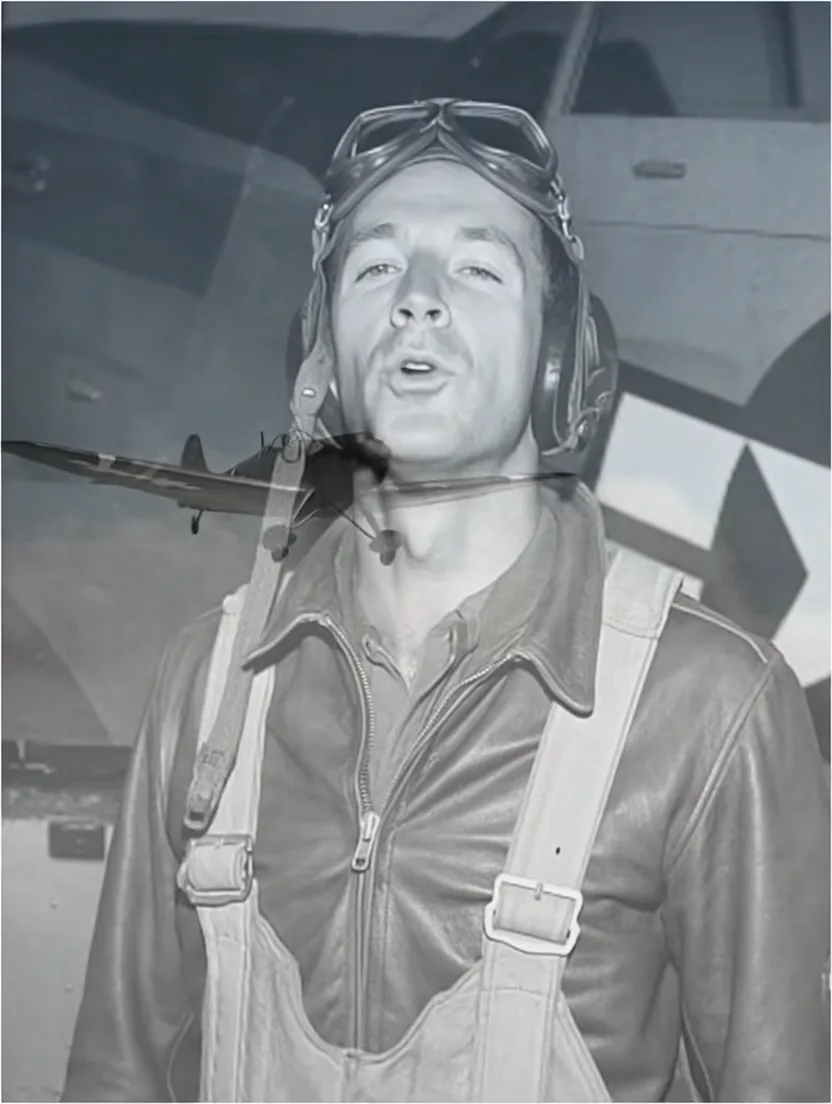
Presumed shot down by enemy fighters.
A clean military death that qualified the family for benefits and gave them a folded flag to remember him by.
But if Bobby had been flying a reconnaissance mission over Amy, what was his plane doing in the Belgian Arden? David picked up his phone and dialed Colonel Janet Thornton’s direct line.
As the head of historical records review, she had access to classified files that might explain the discrepancy.
Janet, it’s David Mitchell.
I need a favor.
What kind of favor? My grandfather’s plane was just found in Belgium.
The location doesn’t match his last known mission parameters.
David, you know I can’t discuss classified historical records even with family members.
I’m not asking as family.
I’m asking as the JPAC liaison who’s about to fly to Belgium to identify remains and recover a missing aircraft.
If there are operational details that affect the investigation, I need to know them.
Colonel Thornton was quiet for a moment.
Send me the coordinates of the wreckage site.
I’ll see what I can find.
and Janet.
The database shows Bobby’s file is under historical review.
What does that mean? It means someone’s been asking questions about Lieutenant Robert Mitchell.
Questions that require answers above my clearance level.
David hung up and booked his flight to Brussels.
As he packed his military identification and investigation materials, he kept thinking about his grandmother’s stories.
Sarah had always said Bobby was too good a pilot to get lost on a simple reconnaissance mission.
She’d insisted something else had happened, something the military hadn’t told them.
For 60 years, the family had assumed she was just processing grief.
Now David wondered if she’d been right all along.
The flight to Brussels gave David time to review everything he knew about his grandfather’s service record.
Bobby had joined the Army Air Forces in 1942, trained as a fighter pilot, and shipped to England in early 1943.
He’d flown 28 combat missions with the 357th Fighter Group before disappearing on what would have been his 29th.
28 successful missions suggested an experienced, competent pilot, not someone likely to get lost or make navigation errors that would put him 200 m off course.
David’s phone buzzed with a text from Colonel Thornton.
File review complete.
Can’t discuss details over phone.
When you return from Belgium, come see me immediately.
There are things about your grandfather’s last mission that aren’t in the standard record.
Detective Dubois met David at the crash site the next morning.
The Belgian officer was in his 50s, methodical and thorough with the kind of patience that came from decades of police work.
The hikers found it yesterday morning, Dubois explained as they walked through the dense forest.
They were following an old trail when they noticed metal reflecting through the trees.
The wreckage was more intact than David had expected.
The P-51 had crashed nose first into a steep hillside, the impact driving the engine deep into the ground, but leaving the tail section and cockpit relatively preserved.
60 years of weather and forest growth had covered much of the aircraft, but the distinctive silhouette was unmistakable.
No fire damage, David observed, walking around the site.
That’s unusual for a combat loss.
The forensics team noticed that as well.
Also, the bullet damage patterns are strange.
Dubois led David to the aircraft’s fuselage, pointing to a series of holes along the port side.
These impacts came from below and behind, not from enemy fighters attacking from above or headon.
David knelt beside the wreckage, examining the bullet holes.
His training in aircraft accident investigation had taught him to read impact patterns.
These hits suggested the P-51 had been flying low, possibly pursuing or being pursued by ground forces.
Detective, have you recovered the personal effects? in evidence bags back at the station.
But I can tell you what we found.
Lieutenant Mitchell’s wallet with military identification, two photographs, one of a young woman, one of what appears to be a military unit, and a sealed envelope containing documents.
What kind of documents? We haven’t opened the envelope.
It’s marked classified and appears to be in good condition despite 60 years in the elements.
We thought it best to wait for military authorization.
David felt his pulse quicken.
If Bobby had been carrying classified documents, it suggested his mission was more than simple reconnaissance.
Detective, I need to see everything, and I need to contact my superiors about those documents.
As they walked back through the forest, David’s mind raced through possibilities.
His grandfather had been shot down while carrying classified materials 200 miles from his supposed mission area by ground forces rather than enemy fighters.
Either Lieutenant Robert Mitchell had been involved in something far more significant than reconnaissance or someone had been lying to his family for 60 years.
The Belgian Federal Police Station in Marshon Fmen was a modern building that contrasted sharply with the medieval architecture of the surrounding town.
Detective Dubois led David through a maze of corridors to the evidence room where Bobby Mitchell’s personal effects were laid out on a steel examination table.
60 years in a crashed aircraft had taken their toll, but the items were remarkably well preserved.
The wallet was leather, cracked, but intact.
The photographs were water stained but recognizable, and the sealed envelope appeared almost untouched, protected by what looked like militarygrade waterproofing.
The wallet contains standard military identification, Dubois explained, handing David a pair of evidence gloves.
Lieutenant Robert Mitchell, blood type O positive.
Also, a few personal items.
David carefully examined his grandfather’s military ID card.
The photograph showed a young man with serious eyes and the kind of determined expression common in wartime portraits.
It was strange seeing Bobby’s face for the first time as a peer rather than through the lens of family mythology.
The first photograph was of his grandmother Sarah, young and smiling, wearing a dress David recognized from family albums.
The second photograph was more interesting.
A group of military personnel standing in front of what appeared to be a British airfield.
Bobby was in the center, but David didn’t recognize the other faces.
this unit photo,” David said, studying the image carefully.
“These aren’t all pilots.
” “How can you tell the uniforms? Some are Army Air Forces, but others are different.
British, maybe free French.
And this man here,” David pointed to a figure in civilian clothes.
“He’s not military at all.
” Dubois made notes as David continued his examination.
The implications were troubling.
If Bobby had been photographed with an international group that included civilians, it suggested involvement in something beyond standard fighter operations.
Detective, I need to contact my superiors before we open that envelope.
But first, can you tell me more about where exactly the aircraft was found? Dubois pulled out a detailed topographical map of the Arden region.
Here, he said, marking an X in the dense forest southeast of Bastonia.
The location is significant because it’s very remote.
No roads, no settlements, just deep forest.
If your grandfather was trying to reach Allied lines after being shot down, this would be an unusual route.
David studied the map, comparing it to his knowledge of 1943 battle lines.
In September 1943, this area was well behind German lines.
If Bobby was flying reconnaissance over Amya, he would have been heading west toward the coast, not southeast into occupied Belgium.
Unless he wasn’t flying reconnaissance, Dubois suggested.
Before David could respond, his phone rang.
Colonel Thornton’s name appeared on the screen.
David, where are you with the investigation? At the Belgian police station examining personal effects.
Janet, I need authorization to open classified documents found at the crash site.
Negative.
Do not open anything marked classified.
I’m flying to Brussels tonight with a team from the historical review board.
We’ll handle the documents.
David felt a familiar frustration with military bureaucracy.
Colonel, I’m the assigned investigator for this case.
If there are operational details that affect David, listen carefully.
Your grandfather’s file has been flagged for review by agencies above my clearance level.
This isn’t just about family curiosity anymore.
There are national security implications.
What kind of implications? The kind that get people transferred to desk jobs in Alaska if they ask too many questions.
Secure everything and wait for my team.
After Thornon hung up, David stared at the sealed envelope on the evidence table.
Whatever was inside had been important enough for Bobby to carry on his final mission and significant enough to still warrant classification 60 years later.
Problems with your superiors? Dubois asked.
Something like that.
They want me to wait for a review team before proceeding.
Ah, bureaucracy the same in every country.
Dubois leaned against the wall, studying David’s expression.
But you’re not the type to wait, are you? David considered his options.
Officially, he should secure everything and wait for Colonel Thornton’s team.
Unofficially, he was investigating his own grandfather’s death and had legitimate authority as the JPAC liaison.
Detective, what do Belgian evidence procedures require for military documents? If they’re found in Belgian territory, they fall under our jurisdiction until formally transferred to appropriate authorities, which could take days to arrange properly.
David appreciated Dubois’s diplomatic approach to international cooperation.
And if a Belgian investigator happened to examine those documents as part of a crash investigation, that would be within standard procedure.
Dubois carefully opened the sealed envelope using evidence protocols.
Inside were three items.
A typewritten mission briefing marked eyes only, a handdrawn map with coordinates marked in pencil, and a list of names with what appeared to be German addresses.
David photographed everything with his phone before reading the documents in detail.
The mission briefing made his blood run cold.
Operation Night andale classification ultra secret primary objective extraction of high-v value intelligence assets from German P facility.
Secondary objective destruction of facility to prevent reprisals.
Flight route modified to avoid radar detection.
Pilot Lieutenant Robert Mitchell voluntary mission expendable asset classification.
Authority combined chiefs of staff.
backup nonauthorized.
The handdrawn map showed the crash site location marked as extraction point alpha.
The coordinates matched exactly where the aircraft had been found.
The list of names included Allied officers reported as prisoners of war along with German camp locations.
Several names were crossed out in red ink.
“Mondure,” Dubois whispered, reading over David’s shoulder.
Your grandfather was on a rescue mission.
David felt the ground shift beneath everything he’d believed about Bobby’s death.
His grandfather hadn’t been shot down during reconnaissance.
He’d been flying a classified extraction mission to rescue Allied prisoners from a German camp.
And according to the documents, it had been a suicide mission from the start.
David’s phone buzzed with a text from an unknown number.
Stop digging.
Some secrets are buried for good reasons.
A friend.
He showed the message to Dubois, who frowned.
Someone knows you’re investigating.
Someone knows I’m getting close to the truth.
David took additional photographs of the documents, then carefully replaced them in the envelope.
Whatever his grandfather had died trying to accomplish, it was significant enough that people were still watching 60 years later.
Detective, I need to find the P camp Bobby was trying to reach.
Can your records department help with historical German military installations in this region? Certainly, but Captain, if someone is monitoring your investigation, perhaps you should be careful about what you discover.
David thought about the text message about Colonel Thornton’s warnings about the classified files that required authorization above her clearance level.
careful doesn’t find the truth about why my grandfather died,” he said.
And after 60 years, “I think his family deserves to know what really happened on his last mission.
” “As they left the evidence room, David couldn’t shake the feeling that he was being drawn into something much larger than a simple crash investigation.
His grandfather had died on a mission so secret it remained classified six decades later.
People were still watching, still protecting whatever Bobby had died trying to accomplish.
The archives of the University of Louisa contained one of Europe’s most comprehensive collections of World War II documentation.
Dr.
Marie Vandenberg, the chief archivist, met David and Detective Dubois in a climate controlled research room lined with filing cabinets that stretched from floor to ceiling.
German P facilities in the Ardans region during 1943, she said, pulling several thick folders from a secured cabinet.
We have documentation from Vermach records captured after the war, plus testimony from local resistance fighters and liberated prisoners.
David spread Bobby’s handdrawn map on the research table, comparing the coordinates with Dr.
Vandenberger’s official records.
The location his grandfather had marked as extraction point Alpha corresponded to an area the Germans had designated as Stalig 17C, a small facility for captured Allied airmen.
This camp is interesting, Dr.
Vandenberg explained, pointing to a typed report in German.
Unlike larger P facilities, six in Tavend C held fewer than 50 prisoners.
But according to resistance reports, these were not ordinary captives.
What made them different? Dubois asked.
Intelligence officers, pilots who had been shot down while carrying sensitive information.
Men who knew things the Germans wanted to extract through interrogation.
David felt pieces clicking together.
So Bobby wasn’t just rescuing random prisoners.
He was extracting intelligence assets who knew Allied secrets.
It appears so.
And look at this.
Dr.
Vandenberger produced a resistance report dated September 15th, 1943, just 2 weeks before Bobby’s disappearance.
The local underground reported unusual activity at 17C.
German officers arriving from Berlin.
specialized interrogation equipment being delivered.
They were preparing for something, David realized, or someone was trying to prevent something, Dubois suggested.
Dr.
Vandenberga spread additional documents across the table.
The camp was evacuated on September 30th, 1943.
All prisoners were transferred to unknown locations.
No record exists of what happened to them.
David checked Bobby’s mission date against the evacuation timeline.
His grandfather had attempted the extraction on September 28th, 1943, just 2 days before the Germans emptied the camp.
The timing can’t be coincidental, David said.
Bobby was trying to get those prisoners out before they could be transferred somewhere worse.
His phone rang, interrupting the research session.
Colonel Thornton’s name appeared on the screen again.
David, where are you? Following up on historical records related to the crash investigation.
I told you to wait for my team.
We’re landing in Brussels in 3 hours.
Janet, I found documentation about a German P facility near the crash site.
I think Bobby was Stop right now.
Whatever you think you found, you’re dealing with information that remains sensitive to current operations.
David stepped away from the research table, lowering his voice.
Current operations? Janet, this happened 60 years ago.
Some secrets don’t have expiration dates.
Meet me at the embassy when I land.
Bring everything you’ve collected and stop pursuing independent research.
After hanging up, David returned to find Dr.
Vandenberga and Detective Dubois examining a resistance fighter’s personal diary from September 1943.
“Captain, you need to see this entry,” Dr.
Vandenberger said, translating from French.
September 28th, 1943.
American plane shot down near 17C.
Pilot attempted to reach camp, but was engaged by German patrol.
Local fighters recovered pilot’s body and buried him in forest.
Germans searched for three days but found nothing.
David’s heart pounded.
Bobby made it to the ground alive.
According to this account, yes, the resistance fighter writes that the pilot spoke English, carried American identification, and had detailed knowledge of the camp layout.
Dubois leaned forward.
What happened to the body? Dr.
Vandenberger continued translating.
The resistance buried him with military honors in a marked grave.
But here’s the interesting part.
The pilot gave them something before he died.
A list of names and a message to pass to Allied intelligence.
What was the message? Tell them the nightingales are flying into a trap.
The Germans know about extraction protocols.
David felt cold certainty settle in his stomach.
Bobby hadn’t just died attempting a rescue mission.
He’d died trying to warn Allied intelligence that their secret operations had been compromised.
Dr.
Vandenbergie, does the diary mention what happened to this list of names? The resistance fighter says he passed it to a British intelligence officer who contacted him 3 days later, but the British officer wasn’t who he claimed to be.
What do you mean? The man spoke perfect English and carried proper identification, but he asked questions no Allied officer should have known to ask.
The resistance fighter suspected he was a German spy using captured credentials.
David’s phone buzzed with another anonymous text.
Your grandfather died protecting secrets that could still get people killed.
Stop while you can still walk away.
He showed the message to Dubois who frowned.
Someone really doesn’t want you learning the truth.
Or they don’t want me learning who betrayed the truth, David replied.
Dr.
Vandenberg had continued reading the diary.
There’s more.
The resistance fighter mentions that several other Allied extraction missions failed around the same time.
Always the same pattern.
Precise German responses as if they knew exactly when and where the missions would occur.
Someone on the Allied side was feeding information to the Germans, David concluded.
And your grandfather discovered it, Dubois added.
That’s why his mission was classified as expendable asset.
Someone wanted him to die rather than return with evidence of betrayal.
David thought about the implications.
Bobby hadn’t been killed by random enemy action.
He’d been sent on a suicide mission by someone who knew he was carrying information that could expose a traitor in Allied intelligence.
Dr.
Vandenberga, do you have any records of who authorized Bobby’s mission? The documents I found were signed by combined chiefs of staff, but that could mean anyone.
I can research authorization records, but it will take time.
and Captain, if what you suspect is true, the people responsible for your grandfather’s death might still have influence in current intelligence agencies.
David’s phone rang again.
This time, the caller ID showed unknown.
Captain Mitchell.
The voice was elderly, American with a slight tremor of age.
Yes.
Who is this? My name is Frank Henley.
I was a prisoner at Stalig 17C in September 1943.
I’ve been waiting 60 years for someone to ask the right questions about what happened to the pilot who tried to save us.
David gestured for silence from his companions.
Mr.
Henley, where are you? Belgium.
I came as soon as I heard about the plane being found.
Captain, your grandfather was a hero who died trying to warn Allied command about a traitor in their ranks.
But the wrong people got his message first.
Can you meet with me? Already am.
I’m in the hotel lobby downstairs.
And Captain, I brought the list of names your grandfather died protecting.
It’s time the truth came out.
David looked at Detective Dubois and Dr.
Vandenberg.
In the space of 2 hours, he discovered that his grandfather had died on a betrayed mission trying to save prisoners from a compromised camp carrying intelligence about Allied security breaches.
And now one of those prisoners was waiting downstairs with evidence that had been hidden for 60 years.
Dr.
Vandenbergie, can you secure copies of everything we’ve found? Of course, but Captain, be careful.
If your grandfather’s mission was betrayed by Allied intelligence, the people responsible may still be protecting that secret.
As they prepared to leave the archives, David realized he was no longer just investigating a crash.
He was uncovering a conspiracy that had cost his grandfather’s life and potentially compromised Allied operations during World War II.
The question was whether he could expose the truth before the same people who killed Bobby decided that his grandson had learned too much.
Frank Henley was waiting in the hotel lobby.
A man in his late 90s with clear eyes and the bearing of someone who had survived things that would break most people.
When he saw David, he smiled with recognition that transcended decades.
“You look just like him,” Frank said, standing with the aid of a wooden cane.
Bobby talked about his family constantly.
Said he was going to have children someday who would know their grandfather died for something that mattered.
Frank Henley’s hotel room overlooked the cobblestone streets of Marshon Famemen, but his attention was focused on a worn leather portfolio that had clearly been treasured for decades.
Detective Dubois had joined them, understanding that this conversation would require official witness.
I’ve carried this for 60 years, Frank said, opening the portfolio with careful hands.
Your grandfather made me promise that if I survived the war, I would keep these documents safe until someone came asking the right questions.
Inside the portfolio were original papers in Bobby’s handwriting, along with what appeared to be German documents and a detailed map of the P camp.
Bobby didn’t die in the plane crash, Frank began, settling into his chair.
The P-51 went down about half a mile from the camp, but he survived the impact.
We heard the crash from our barracks and saw German patrols rushing toward the sound.
David leaned forward.
How do you know what happened to him? Because 2 hours later, he was inside our compound.
Inside the camp? How? Frank smiled grimly.
Your grandfather was one hell of a pilot, but he was also one hell of a soldier.
He’d memorized the camp layout from intelligence reports, studied German patrol patterns, and somehow managed to infiltrate a heavily guarded P facility.
Dubois made notes while Frank continued his account.
Bobby found me around midnight on September 28th.
I was the ranking Allied officer among the prisoners, so he came to me first.
He explained that he was there to extract specific intelligence officers who had knowledge of German coderebreaking operations.
Which officers? Frank pulled out a list written in Bobby’s neat handwriting.
Lieutenant Commander James Hartwell, Royal Navy cryptographer.
Captain Ernst Müller, Free French intelligence liaison.
Flight Lieutenant William Page, RAF photo reconnaissance specialist.
And me, I was Army Signal Corps specializing in German radio intercepts.
David studied the list.
You all had intelligence about German operations.
More than that, we all had knowledge of how the Germans were intercepting Allied communications.
Captain, the reason we were in that special camp wasn’t because we were valuable prisoners.
It was because we’d all discovered the same thing, which was Frank’s expression darkened.
Someone in Allied intelligence was feeding the Germans our radio frequencies, our code protocols, and our mission details.
We’d each figured out pieces of the puzzle from different angles, and the Germans needed to know exactly how much we’d learned.
Dubois looked up from his notes.
So, the camp was an interrogation facility.
Worse than that, it was where the Germans brought Allied intelligence officers who had stumbled onto the fact that their own side was compromised.
They needed to extract every detail about what we knew and who we might have told.
David felt the scope of the conspiracy expanding.
Bobby wasn’t just rescuing prisoners.
He was extracting witnesses to Allied intelligence betrayal.
Exactly.
And he almost succeeded.
Frank pulled out Bobby’s hand-drawn map of the camp annotated with escape routes and guard positions.
Your grandfather had done his homework.
He knew about a drainage tunnel that led from the camp kitchen to a culvert outside the perimeter fence.
The plan was to extract us one at a time over three nights.
What went wrong? The same thing that had gone wrong with every other Allied intelligence operation in that sector.
The Germans were waiting for us.
Frank’s voice grew heavy with old anger.
Bobby had started moving Lieutenant Commander Hartwell through the drainage tunnel when German guards surrounded both ends.
They’d known about the escape route, known about the timing, known exactly where to position their forces.
David’s phone buzzed with another anonymous text.
Meeting with old prisoners is dangerous for your health.
Some veterans don’t understand operational security.
He showed the message to Frank and Dubois.
Frank read it and laughed bitterly.
60 years later, and they’re still trying to cover it up.
Who’s they, Mr.
Henley? The people who sent your grandfather on a suicide mission to eliminate witnesses to their betrayal.
the same people who classified his records so no one would ever investigate what really happened.
Frank pulled out a German document from his portfolio.
Bobby gave me this before the guards found him.
It’s a copy of a German intelligence report dated September 27th, 1943, one day before Bobby’s mission.
Dubois examined the document.
It’s in German, but I can make out some details.
Radio intercepts, mission schedules, personnel assignments.
Bobby had found that document in the camp commodant’s office during his infiltration.
Frank explained it proved that the Germans had detailed advanced knowledge of Allied operations, including the exact timing and personnel assignments for extraction missions.
David studied the German report.
Even without reading German, he could see Allied unit designations, radio frequencies, and what appeared to be mission timets.
This is intelligence that could only have come from someone with high level access to Allied operations.
David realized Bobby thought so too.
That’s why he was so determined to get this evidence back to Allied command even after the extraction failed.
What happened to him? Frank’s voice grew quiet.
The German guards captured Hartwell and Bobby in the drainage tunnel around 0300 hours.
They were brought back to the camp and taken to the commodant’s office for immediate interrogation.
Frank paused, clearly struggling with painful memories.
I was in a barracks that faced the administrative building.
Through the window, I could see lights in the common office all night.
Around dawn, I saw German soldiers carrying something wrapped in a tarp toward the motorpool.
Bobby, I believe so.
But, Captain, here’s what the official records won’t tell you.
Before the guards found him, your grandfather managed to complete one part of his mission.
Frank reached into his portfolio and pulled out a small cloth bundle.
Inside was a military radio transmitter, compact but sophisticated for 1943 technology.
Bobby carried this with him to maintain contact with Allied intelligence during the extraction.
Before he was captured, he transmitted everything he’d discovered about the German intelligence documents and the compromised Allied operations.
David examined the radio equipment.
Who did he transmit to? That’s where the story gets interesting.
Bobby was supposed to be in radio contact with a British intelligence officer camed Blackbird.
But when Bobby tried to warn Blackbird about the German intelligence documents, the response he received proved that Blackbird was the source of the leak.
How? Frank pulled out Bobby’s final handwritten note.
Your grandfather wrote this during his last radio transmission.
He’d discovered that Blackbird was feeding the Germans information about Allied operations, including the extraction mission that was supposed to save us.
David read Bobby’s note.
Blackbird compromised.
Germans have full knowledge extraction protocols.
Mission betrayed from inside.
German intelligence documents prove Allied radio frequencies compromised.
Blackbird is feeding them operational details.
If I don’t survive, investigate all missions authorized through Blackbird channel minus Lieutenant R.
Mitchell.
Final transmission 0245 hours 28th September 1943.
Mr.
Henley, who was Blackbird? Frank’s expression was grim.
Someone with enough authority to authorize secret missions and enough access to classify the results when those missions failed.
Someone who could arrange for your grandfather’s records to remain buried for 60 years.
David’s phone rang.
Colonel Thornton again.
David, I’m at the embassy.
You need to get here immediately and bring any materials you’ve collected.
Janet, I found evidence that Bobby’s mission was compromised by Allied intelligence.
Someone cenamed Blackbird was, “Stop talking.
Stop investigating.
Get here now.
That’s a direct order.
” After hanging up, David looked at Frank Henley, who was watching him with understanding.
“Your colonel doesn’t want you learning about Blackbird,” Frank observed.
“Why would that still matter 60 years later?” Because some secrets don’t die with the people who kept them, Frank said.
And because the people who inherited those secrets have been protecting them ever since.
David realized he was facing the same choice his grandfather had faced 60 years earlier.
Follow orders and let the truth stay buried or risk everything to expose a conspiracy that had cost Allied lives.
Frank Henley leaned forward.
Captain, I’m 97 years old.
I’ve kept your grandfather’s secret for six decades, waiting for someone brave enough to honor his sacrifice by finishing what he started.
What did he start? Exposing the people who betrayed Allied intelligence operations for their own purposes.
Your grandfather died trying to save not just us prisoners, but every Allied soldier whose missions were being compromised by traitors in their own command structure.
David looked at the evidence spread across the hotel room table, documents proving Allied intelligence betrayal, German reports showing advanced knowledge of secret operations, and Bobby’s final transmission identifying the source of the leak.
Mr.
Henley, will you testify to what you’ve told me? I’ve been waiting 60 years for someone to ask.
Outside the hotel window, David noticed two men in dark suits standing across the street watching the building entrance.
Someone was definitely monitoring his investigation.
The US Embassy in Brussels was a fortress of glass and steel, but David felt more like he was entering a trap than a sanctuary.
Colonel Thornton met him in the lobby with two men he didn’t recognize.
Older, gray-haired, with the kind of bearing that suggested intelligence backgrounds rather than regular military.
David, these are Dr.
William Stone and Mr.
Richard Hayes from the State Department’s Historical Classification Review Board, Thornton said, her tone carefully neutral.
They need to discuss your investigation.
Dr.
Stone gestured toward a secure conference room.
Captain Mitchell, we understand you’ve been conducting research into your grandfather’s mission.
We’re here to help clarify some historical details that may have caused confusion.
David carried Frank Henley’s portfolio, but he’d left copies of everything with Detective Dubois as insurance.
I found evidence that my grandfather’s mission was compromised by someone camed Blackbird.
The two State Department officials exchanged glances.
Hayes leaned forward.
Captain, you’ve stumbled into information related to ongoing intelligence operations.
What you’ve interpreted as historical betrayal was actually part of authorized counter inelligence activities.
Counterintelligence.
Dr.
Stone opened a classified folder.
Operation Nightingale was a complex deception operation designed to feed false information to German intelligence.
Your grandfather was aware that his mission would appear to fail, but the real objective was to convince the Germans that their intelligence sources were more valuable than they actually were.
David felt the room shift around him.
You’re saying Bobby knew it was a deception operation.
Lieutenant Mitchell volunteered for a mission that required appearing to be captured while carrying false intelligence.
The betrayal you’ve discovered was actually the successful completion of a counter inelligence operation that saved thousands of Allied lives.
Hayes produced additional documents.
The prisoners at Stalig 17C were part of the operation.
They carried false information designed to mislead German codereers about Allied communication protocols.
David thought about Frank Henley’s account, Bobby’s final transmission, the German documents proving advanced knowledge of Allied operations.
“That’s not what the evidence shows.
” “Evidence can be misinterpreted without proper context,” Dr.
Stone said smoothly.
“Your grandfather was a hero who died completing a successful mission.
The classification was necessary to protect the operational methods that continued to be used throughout the war.
” Colonel Thornton had remained silent during the exchange, but David could see tension in her expression.
David, these gentlemen have full authority over historical classification matters.
Your investigation needs to be transferred to their jurisdiction.
David opened Frank Henley’s portfolio.
I have Bobby’s final radio transmission, his own words identifying Blackbird as a compromised intelligence source.
Hayes examined Bobby’s handwritten note.
Captain, your grandfather was maintaining cover even in his final transmission.
The identification of Blackbird as compromised was part of the deception operation designed to convince German interceptors that their source had been discovered.
And the German documents Bobby found proving Allied operations were compromised.
false intelligence planted by Allied counter intelligence to make the Germans believe their information was more valuable than it actually was.
Dr.
Stone closed the classified folder.
Captain, every piece of evidence you’ve discovered supports the conclusion that Operation Nightingale was a successful deception operation.
Your grandfather died a hero completing a mission that protected Allied lives.
David stared at the two officials, recognizing the polished deficiency of a well-rehearsed cover story.
Everything had an explanation.
Every piece of evidence could be reinterpreted to support their narrative.
What about Frank Henley’s testimony? He was there.
He saw what happened.
Hayes smiled sympathetically.
Mr.
Henley was 97 years old and had been a prisoner of war under extreme stress.
memory can be unreliable, especially when filtered through decades of speculation about events he didn’t fully understand at the time.
He has documents, Bobby’s radio equipment, German intelligence reports, all consistent with a deception operation.
Captain, we understand your desire to honor your grandfather’s memory, but you’re in danger of misinterpreting a successful intelligence operation as evidence of betrayal.
David’s phone buzzed with a text from Detective Dubois.
Hotel room searched after you left.
Henley moved to secure location.
Documents safe.
The officials noticed his phone.
Dr.
Stone leaned forward.
Captain, we need you to understand that pursuing this investigation further could compromise current intelligence operations.
There are national security implications to making these historical details public.
What kind of implications? Hayes exchanged another glance with Dr.
Stone.
The methods used in Operation Nightingale formed the basis for intelligence protocols still in use today.
Public revelation of those methods could compromise ongoing operations and endanger current assets.
Colonel Thornton finally spoke.
David, these gentlemen are offering you a choice.
accept the official explanation for your grandfather’s mission and receive recognition for his heroic service or continue pursuing an investigation that could result in charges for compromising classified information.
David felt the weight of 60 years of secrecy pressing down on him.
The official story was clean, heroic, and gave his family the recognition they’d always wanted.
The truth was messy, dangerous, and might never be fully provable.
I need time to consider.
Dr.
Stone shook his head.
Captain, time is a luxury we don’t have.
Your investigation has already attracted attention from parties who have their own interests in keeping certain historical details buried.
What parties? foreign intelligence services who would benefit from understanding how Allied counter intelligence operated during the war.
Your research has been noted by people who don’t share our interest in protecting American operations.
Hayes produced a formal document.
We’re prepared to offer you a commendation for your grandfather’s service, full military honors for his burial, and a substantial settlement for your family’s years of uncertainty about his fate.
in exchange for all materials related to your investigation, your agreement to accept the official explanation for Operation Nightingale, and your cooperation in debriefing sessions to ensure no classified information has been compromised.
David studied the settlement offer.
It was generous, patriotic, and would give his family everything they’d wanted for 60 years.
It was also a bribe to stop investigating the truth about Bobby’s death.
What happens if I refuse? The room grew cold.
Dr.
Stone’s sympathetic expression hardened.
Captain, you’ve already obtained classified information without proper authorization.
You’ve conducted unauthorized research into ongoing intelligence operations.
You’ve compromised operational security by sharing classified details with foreign nationals.
Any of those charges could result in court marshall and imprisonment, Hayes added.
Your military career would end, your family would be disgraced, and your grandfather’s memory would be tainted by association with your criminal activity.
Colonel Thornton looked uncomfortable, but didn’t contradict the threats.
David thought about Frank Henley, 97 years old and still fighting for justice.
about Bobby’s final transmission warning of betrayal, about the surveillance teams and anonymous threats.
I need to speak with my attorney before making any decisions.
” Dr.
Stone stood.
Captain, we’re offering you 24 hours to consider our proposal.
After that, the offer is withdrawn and the investigation proceeds under different circumstances.
What does that mean? Hayes’s smile was cold.
It means that sometimes investigations end with unfortunate accidents.
Your grandfather discovered that pursuing certain truths can be hazardous to one’s health.
As David left the embassy, he realized he was facing the same choice Bobby had faced 60 years earlier.
Accept the official story and live safely or pursue the truth and risk everything.
The difference was that Bobby had made his choice knowing the consequences.
David was just beginning to understand how dangerous the truth could be.
Outside the embassy, Detective Dubois was waiting in an unmarked car.
Captain, we need to talk.
Mr.
Henley has information about Blackbird that changes everything.
David got into the car knowing he was crossing a line that would make him either a hero like his grandfather or another casualty of a secret too dangerous to reveal.
What did Frank tell you? Blackbird wasn’t just feeding information to the Germans during the war, Dubois said, starting the engine.
According to Henley, Blackbird survived the war and continued operating in Allied intelligence for decades afterward.
David felt cold certainty settle in his stomach.
You’re saying Blackbird is still alive? was still alive as of 10 years ago when someone began systematically eliminating the remaining prisoners from Stalic 17C.
Frank Henley is the last survivor.
As they drove through Brussels, David realized that Bobby’s mission hadn’t ended with his death in 1943.
The conspiracy he’d died trying to expose was still active, still protecting itself, still eliminating threats to its survival.
The safe house was a farmhouse 20 km outside Brussels arranged through Detective Dubois’s contacts in the Belgian intelligence service.
Frank Henley sat at a wooden kitchen table looking frailer than he had that morning, but with eyes that burned with decades of suppressed anger.
They offered you the hero’s story, didn’t they? Frank asked as David entered.
Your grandfather died completing a successful mission classified for national security.
Everyone gets medals and settlements.
How did you know? Because they’ve been telling that same story for 60 years.
Every time someone gets close to the truth about Blackbird, they offer the same deal.
Accept the lie and live comfortably or pursue the truth and face the consequences.
Detective Dubois spread documents across the kitchen table.
Mr.
Henley has been tracking this for decades.
Show him what you found, Frank.
Frank opened a different portfolio.
This one containing newspaper clippings, obituaries, and what appeared to be accident reports.
After the war, seven of us survived Stalig 17C.
We stayed in contact, compared notes, tried to piece together what really happened.
David examined the clippings.
What did you find? A pattern.
Every few years, one of the survivors would die in what appeared to be an accident.
Car crashes, falls, heart attacks, house fires.
Always explainable, always just unfortunate enough to avoid suspicion.
Frank pulled out a timeline he’d meticulously maintained.
Lieutenant Commander Hartwell died in 1953, car accident in London.
Captain Müller died in 1961, fell downstairs at his home in Paris.
Flight Lieutenant Paige died in 1968, heart attack during a routine medical exam.
That could be coincidental, David said, though he didn’t believe it.
Vincent Torres died in 1984, gas leak explosion at his house in California.
Walter Briggs died in 1997, drowning accident while fishing alone.
Each death occurred within months of that survivor attempting to publish memoirs or contact military historians.
Detective Dubois pointed to the most recent entry on Frank’s timeline.
Ernest Kellerman, 2014.
The last survivor besides Frank.
What happened to him? Frank’s voice grew quiet.
Ernie contacted me in 2013.
Said he’d found new evidence about Blackbird’s identity.
He’d been researching Allied intelligence archives that had been declassified after the Cold War ended.
What kind of evidence? Frank pulled out photocopies of military personnel records.
Ernie discovered that Blackbird wasn’t just a code name.
It was the operational alias for a specific intelligence officer who had access to all Allied communication protocols and mission authorizations.
David studied the personnel records.
They were heavily redacted, but he could make out service dates, assignment locations, and partial names.
The officer using the Blackbird alias was assigned to coordinate intelligence operations between American, British, and Free French forces.
He had access to everything: radio frequencies, extraction protocols, agent identities, mission timets, and he was feeding it all to the Germans.
Not for ideology, Frank said.
For money, Ernie found evidence that the Blackbird officer was being paid by German intelligence through Swiss bank accounts.
It wasn’t about Nazi sympathies.
It was about personal profit.
Detective Dubois examined the financial records.
These bank transactions continued after the war ended.
That’s the key detail, Frank explained.
The payments didn’t stop in 1945.
They continued through the 1950s, 1960s, and beyond.
Blackbird didn’t just betray Allied operations during the war.
He sold intelligence secrets throughout the Cold War.
David felt the scope of the conspiracy expanding.
You’re saying this person continued operating as a double agent for decades? Triple agent, actually, selling American secrets to the Soviets, Soviet secrets to the Americans, and playing all sides for personal profit.
The perfect position for someone with high level intelligence access.
Frank pulled out the final document from his portfolio.
Ernie’s last communication to me sent three days before he died.
He’d identified Blackbird.
David read the handwritten note.
Frank found him.
Blackbird real name Major William Garrett, later promoted colonel, then Pentagon intelligence liaison.
Still alive, still active as of 2013.
Has been protecting his wartime activities by eliminating witnesses.
Your grandfather died because Garrett couldn’t risk exposure.
We’re all targets.
If something happens to me, the evidence is in safety deposit box 347, First National Bank of Richmond, Virginia.
Key hidden behind loose brick in my basement wall, third row from bottom, east side.
Ernie, did you find Ernie’s evidence? Frank nodded grimly.
I drove to Richmond after his funeral.
found the key exactly where he said.
The safety deposit box contained 60 years of documentation proving that William Garrett was Blackbird.
What kind of documentation? Frank spread additional papers across the table.
Bank records showing payments from German, Soviet, and other intelligence services.
Copies of classified documents Garrett sold to foreign powers.
most importantly, communication records proving that Garrett was the source of the intelligence leaks that compromised Allied operations.
David examined the bank records.
The amounts were staggering.
Millions of dollars paid over decades to an account registered under various aliases, all traceable to William Garrett.
Frank, is this William Garrett still alive? As of last year, yes, he’s 94, living in a private care facility in Arlington, Virginia.
Still has connections in the intelligence community, still protected by people who depend on his secrets staying buried.
Detective Dubois had been making notes.
This explains the embassy officials reaction.
If Garrett is still alive and still has influence, he could arrange for David’s investigation to be shut down.
David’s phone buzzed with a text from Colonel Thornton.
Your 24-hour deadline has been moved up.
Report to embassy immediately for final decision.
Frank saw the message and reached for David’s arm.
Captain, they’re not going to give you 24 hours.
If Garrett knows you found this evidence, he’ll act to protect himself.
What do you mean? I mean that Ernest Kellerman died within hours of finding Garrett’s identity.
Vincent Torres died the day after he contacted a military historian.
Your grandfather died because he transmitted evidence about Blackbird’s betrayal.
David felt the weight of realization.
They’re going to kill me regardless of what I decide.
Unless you act first, Frank said, your grandfather died trying to get this evidence to the right people.
You have the chance to finish what he started.
Detective Dubois leaned forward.
Captain, Belgian authorities can offer protection, but only if you formally request asylum and provide evidence of threats to your safety.
Continue reading….Next »
News
La impactante emoción de la familia de alberto vázquez a sus 85 años que reveló un amor tardío y momentos que derritieron el corazón de todos.
A los 85 años, Alberto Vázquez, una de las voces más legendarias de la música romántica latinoamericana, figura icónica del bolero. La balada y el rock and roll mexicano atraviesa uno de los momentos más sensibles y emocionalmente complejos de…

La impactante última llamada de ace frehley antes de su trágico final que hizo llorar a toda su familia y dejó al rock en silencio eterno.
Antes de comenzar con este extenso relato sobre la vida, la muerte y el legado del legendario guitarrista de Kiss, Ace Fredy, quiero invitarte a ser parte activa de esta comunidad. Tu apoyo es esencial para que podamos seguir trayendo…

La impactante confirmación del trágico final para alejandra guzmán a sus 57 años que encendió alarmas y dejó a sus fans en un abismo de incertidumbre.
A los 57 años, Alejandra Guzmán, una de las figuras más controvertidas, intensas y resilientes del espectáculo latinoamericano, vuelve a ocupar los titulares del mundo de la música y la prensa rosa. Pero esta vez la atención mediática no surge…
La impactante mirada a la trayectoria y calidad de vida de josé mercé a sus 70 años que revela un hombre lleno de fuego gitano pero marcado por una herida que nunca cierra.
A los 70 años cuando muchos artistas ya han bajado definitivamente el telón o prefieren refugiarse en un silencio discreto. José Mercé, leyenda viva del flamenco, sorprendió a toda España con una confesión inédita por primera vez. Habló abiertamente sobre…

La impactante confesión de maría luisa godoy a sus 45 años que reveló por primera vez cómo su matrimonio fue un verdadero infierno y dejó al descubierto años de dolor oculto.
A los 45 años, María Luisa Godoy, uno de los rostros televisivos más queridos de Chile, ha decidido romper un silencio que llevaba casi dos décadas firmemente sellado. Durante años, su vida pública había sido un desfile de sonrisas impecables,…

La impactante confesión de angélica vale tras 14 años de matrimonio que reveló el verdadero motivo de su divorcio con otto padrón y dejó a todos en shock.
Antes de comenzar con esta historia profundamente humana y llena de emociones, te invito a suscribirte a nuestro canal, a dejar un me gusta si aprecias el periodismo que va más allá de los titulares y a compartir este artículo…
End of content
No more pages to load